
Halloween and Cats: A Cat Behavior Support Guide
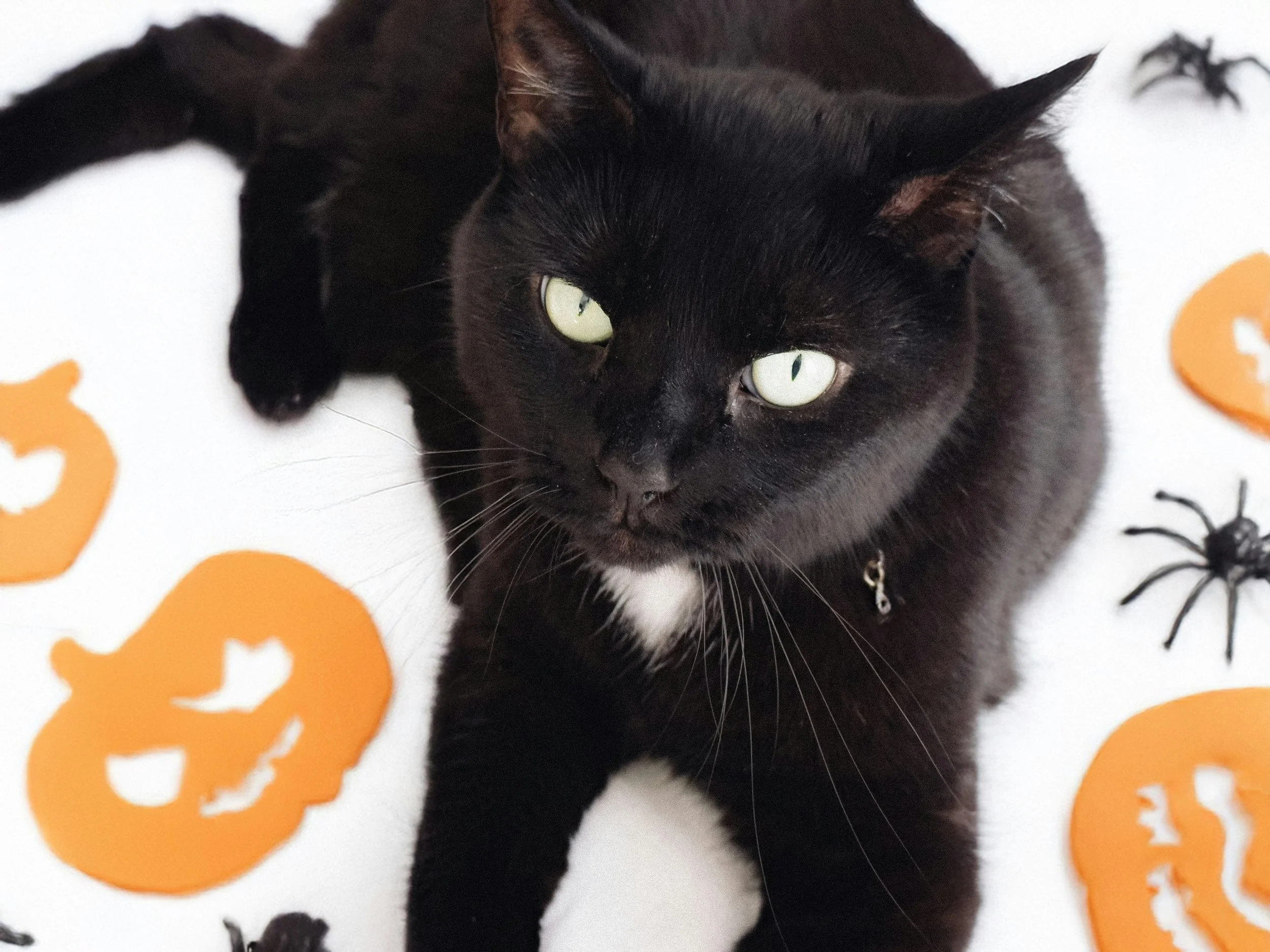
It’s spooky season and with Halloween right around the corner, supporting your cat’s comfort is crucial in maintaining their sense of safety.
Halloween can introduce changes to a cat's environment that may increase stress, uncertainty, or discomfort. Visitors, costumes, decorations, unfamiliar sounds, changes in routine, and repeated opening of the front door can all affect how a cat experiences their home however, the degree your cat may be affected depends on their personality and how they respond to change.
Choice, Consent, & Control
I always stress the importance of giving your cat choice and control over their environment and how they interact with it as well as allowing them the option to interact or not and that applies to Halloween as well. Always observe your cat’s body language for signs of stress and allow them to leave the room if they’re uncomfortable.
Potential Stressors
The most common Halloween stressors fall into these categories:
⤗ Unfamiliar people and social interactions: Visitors, trick-or-treaters, costumes, and unfamiliar movements or voices can increase stress for cats who prefer distance from unfamiliar people or who are uncertain about new social interactions.
⤗ Noise and environmental stimulation: Doorbells, knocking, excited voices, laughter, music, and repeated activity can increase overall stress and reduce a cat's ability to rest or navigate their environment comfortably.
⤗ Changes to the environment: Decorations, new objects, unusual smells, moving displays, and changes to familiar spaces can create uncertainty for cats who rely on predictable surroundings.
⤗ Front door access and escape opportunities: Repeated opening of the front door can increase the likelihood of an escape, particularly when a cat is startled, curious, or attempting to create distance from unfamiliar activity.
⤗ Individual preference and tolerance: Not all cats want the same amount of social contact or environmental stimulation. Some cats may choose to investigate visitors while others may prefer to hide, remain in another room, or avoid interaction entirely.
⤗ Lack of control and escape options: Cats may become more reactive when they cannot easily move away, access a safe space, or avoid unfamiliar people, sounds, or activity. Limited hiding spaces or blocked pathways can increase stress.
How to support cats during Halloween
Cats generally do best when their environment is predictable, resources are accessible, and they have opportunities for distance, choice, and control.
⤗ Provide a quiet, comfortable retreat where your cat can rest without being followed, cornered, or disturbed by visitors. Include familiar resources such as food, water, a litter box, resting areas, hiding spaces, scratching areas, and enrichment.
⤗ Give your cat safe places to retreat where they can create distance from household activity. Allow your cat to remain in these spaces rather than removing them from hiding or encouraging them to interact with visitors.
⤗ Create multiple pathways and escape options so your cat can move through the home without being forced into close contact with people, other animals, or unfamiliar activity.
⤗ Learn to read cat body language and watch for early signs of stress such as hiding, avoidance, crouching, freezing, flattened ears, tail movement, changes in body posture, hissing, growling, or attempts to escape.
⤗ Interrupt rising stress early and calmly by reducing stimulation or creating distance rather than waiting for a cat to become highly distressed or attempt to escape.
⤗ Pair unfamiliar experiences with positive experiences such as treats, play, meals, or calm attention when your cat is comfortable enough to participate. Allow your cat to determine their distance from unfamiliar activity rather than requiring interaction.
⤗ Maintain predictable routines and provide individual play, attention, and enrichment so your cat has opportunities to meet their needs without relying on interaction with visitors or participation in Halloween activities.
Common Household Choices to Avoid:
Some situations can unintentionally create stress or increase the likelihood of defensive, fearful, or avoidant behavior.
⤗ Forcing cats to remain in social situations or interact with visitors when they are attempting to create distance.
⤗ Putting cats in costumes may be cute or entertaining for us but they often make cats uncomfortable and feel restricted or inhibited.
⤗ Allowing visitors or children to repeatedly approach, follow, corner, pick up, or handle a cat who is attempting to move away or communicate discomfort.
⤗ Punishing hiding, hissing, growling, swatting, staring, or other warning signals rather than working to identify and prevent the situations that lead to them.
⤗ Providing too few safe spaces or placing essential resources in locations where visitors, other animals, or household activity can interfere with access.
⤗ Assuming cats should participate in Halloween activities simply because they live in the home or have previously tolerated visitors, costumes, or other changes.
⤗ Physically placing cats with visitors, forcing greetings, or using restraint to make cats tolerate unfamiliar interactions.
⤗ Waiting until a cat becomes highly distressed or attempts to escape before making changes to the environment or interaction patterns.
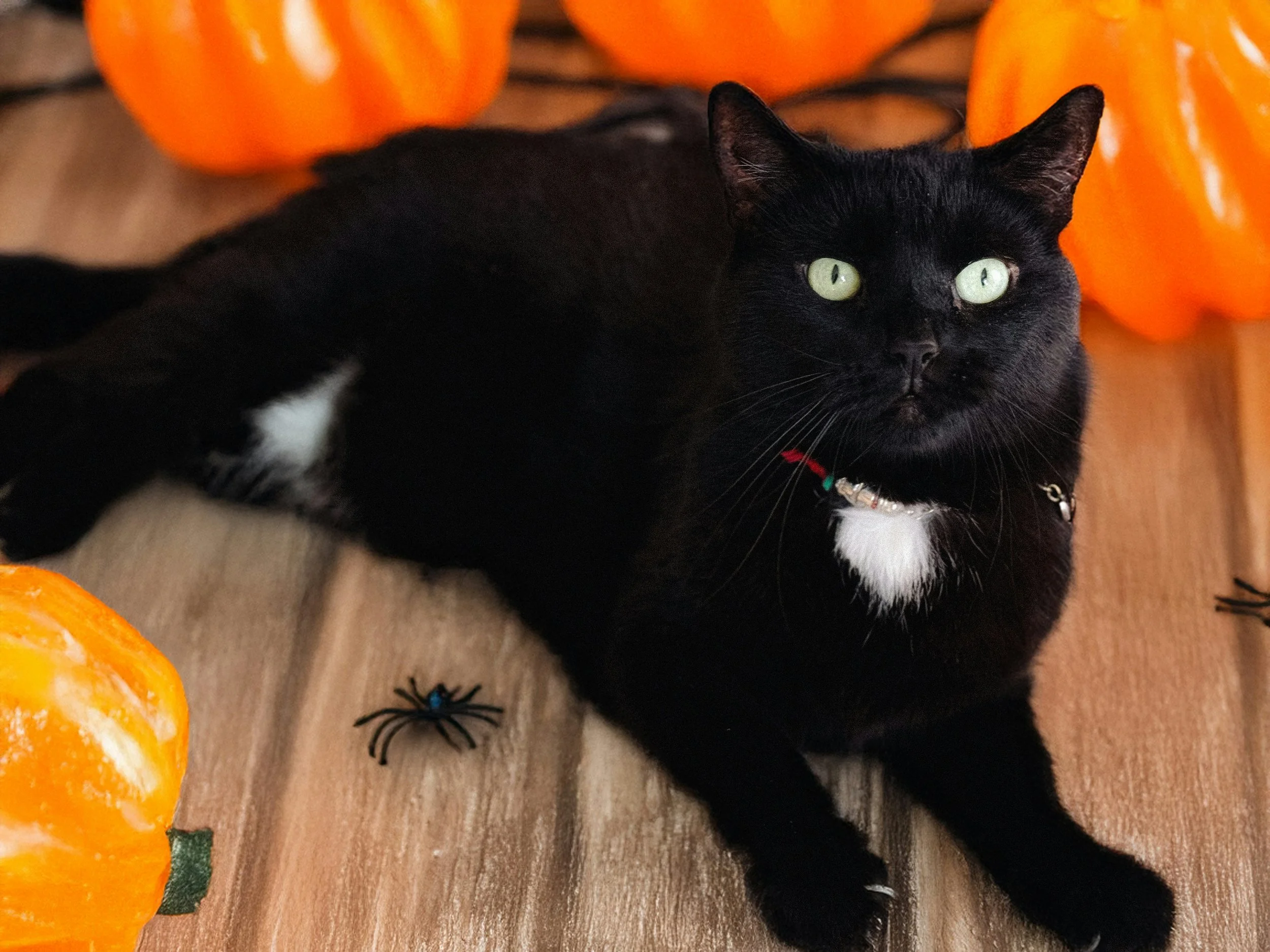
With a few considerations the family can celebrate and enjoy the fun without jeopardizing their cat(s)’ sense of peace, calm, and safety.